Sunday, March 13, 2011
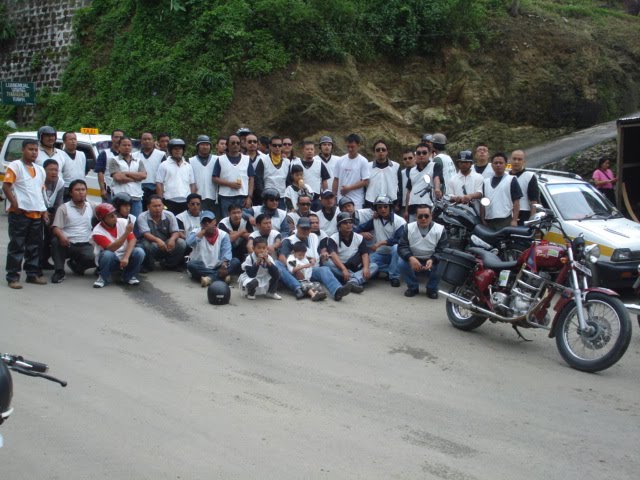
The Aizawl Thunders
In Aizawl, Mizoram, in the year 1999, a group of bikers who rode Royal Enfield Bullet bikes came together, and taking their cue from American biking clubs that they had heard about (specifically Hells Angels), decided to call themselves the Royal Enfield Bullet Riders, and went on their first ride on November 5, 1999. There were only a handful of riders then, and most of them rode second-hand bikes that had been reassembled, repaired, and remodeled. Their enthusiasm and their obvious love for the machines they rode made up for any other lack in terms of numbers and equipment. They were later to be officially recognized as the first Bullet Club in India by the Royal Enfield Company, the manufacturers of the bikes they rode.
As the rides continued, their numbers also gradually grew, and by 2002, they had grown to the point where the necessity of electing leaders for the Club was felt. Leaders, called Chiefs, were thus elected, and the Club was also renamed The Aizawl Thunders, a name suggested by one of the founding members, Rinchhana.
Over time, the Thunders evolved into a group that was organized along coherent lines, with proper rules of conduct, identifiable modes of attire, and activities stretched beyond the bike rides in open countries to charity rides for specific causes. They chose deep blue and red as their official colors, and the phrase, “Forever Young” became their motto. Stickers with the Thunders logo were distributed to members, bearing the year of membership, which incidentally, was to be renewed each year, and T-shirts were designed and distributed amongst members of the group.
In 2003, a Constitution was framed by the Executive Committee members of the Thunders, and in accordance with their Constitutional framework, elections are democratically undertaken annually, and in 2006, it was agreed that three Chiefs would be elected at each election. These three Chiefs would then distribute the responsibilities of leadership amongst themselves. Early activities included rides mainly, and after they grew in the number, they would often hire themselves out as security personnel in concerts and parties, which they have since stopped doing.
The bikers have their own lingo, certain words and phrases that provide no meaning to those outside the group. For instance, the word, “Sootpoot”, which contains sexual innuendo (for them), is used as an adjective, a noun, and a verb, and usually denotes something or somebody attractive. If a woman is described as ‘sootpoot’, it is meant to be a compliment; if a biker is up to some ‘sootpoot’ he is either flirting or up to some mischief with a woman, and so on. Members address each other as “Boss Boss”, a term of respect. The bikers also have certain songs they sing when they go out on rides or gather for social events, the lyrics of which are deliberately silly and in reference to certain activities and adventures they have encountered. One of their songs tells of the bikers’ encounter with a village lass on one of their trips. She is simply referred to as ‘Two-cell battery’ because she apparently owned a flashlight with a two-cell battery, of which she was inordinately proud, and rightly so, for when night fell, the village was enveloped in darkness due to power failure, and her flashlight came in very handy. When the trip was over and they sat down to relive their experiences, it was discovered that most of the bikers on that trip had ‘sootpooted’ with her over the course of the night they spent in her village. The song mocks their own gullibility, and pays homage to her artful ways. The chorus simply celebrates the “two-cell battery” girl.
In so far as the experience of the bike ride is concerned, a common theme amongst those who were interviewed was the thrilling sense of power given by the throb of the engine as it effortlessly maneuvers terrain of all kinds. The identity of the biker melts into that of the bike, until man and machine seem to be one. His machine, then, becomes an extension of his personality; conversely, he becomes an extension of the unleashed force of the machine. On foot, the biker is like any other man. Seated on his powerful machine, he is wild beast, conqueror, powerful regent, warrior, bird, man, god, machine, and wind. Members have also shared that the rhythmic, thumping sound of the bike itself invokes a response in them which is intense. Yet another analogy is drawn between the riding of the bike and that of a powerful horse.
Other members have similarly close relationships with both their bikes and the Thunders Clan. Some members have christened their bikes with female names such as ‘Rosalyn’, and refer to them as such. The clan seems to provide its members with a valid identity that they are proud of. This sense of belonging, this claim to a valid identity, is reinforced by tangible evidence of membership within the specific community, such as the attire that is worn by them – leather jackets, official black t-shirts, tight jeans and leather boots- and Thunders paraphernalia such as logos, stickers, and so on. The male bonding that takes place is as much an affirmation of their solidarity and affiliation to the clan, as it is also a safe harbor that ascertains each member’s significance and worth. In other words, for many, it is the only real identity they have, in that it is one that is voluntarily embraced by them, as opposed to other roles that they play within societal institutions.
Interestingly, the Aizawl Thunders have also succeeded where most Biker Clubs have failed or have not been bothered to try. Like most biker clubs, certain assumptions abound as to the nature of the identity presented by their Biker community. Certainly, the standard attire, greasy long hair gathered in a pony tail, the smoking, drinking and womanizing, the flouting of social norms and conventions often associated with their counterparts in the west also make their appearance within the Thunders. However, almost from the very beginning, the leaders of the clan have had very clear visions as to the direction that it was going to take. A former Chief of the Thunders, Rinchhana, has stated that his dream was that the Biking Club would serve as an ambassador of the state of Mizoram, representing the Mizo people in cultural and social spheres all over the world. To this end, they have consistently renewed their efforts at contributing to society through Charity rides, raising funds and awareness for charitable causes, although they have so far refused to call themselves a charitable organization. In this way, they subvert the roles traditionally attributed to them by using their rides to focus attention on social issues. In fact, they have now become one of the most popular communities in Mizoram, even often being hired by the government to help raise awareness on issues such as disaster management, fire prevention, and conservation of water. Hence, despite the fact that personal preferences and obsessions brought them together, they have moved beyond the self-serving arena into a sphere where they now contribute significantly to the very society which has labeled them ‘rebels’.
Sunday, August 30, 2009
TEXTILES OF MIZORAM: The Puan.


-Dr. Cherrie L. Chhangte
Assistant Professor, Mizoram University.
Paper Presented at Woven Tales from the North East: One-Day Textile Conference, 16th June 2009 at NCPA Mumbai.
Mizoram, which became the 23rd state of the Indian Union on 20th February 1987, is a mountainous region bordered by Bangladesh in the west, Myanmar in the east, the Bay of Bengal in the South, and Assam and Manipur in the north. Tribes that inhabit the state of Mizoram include the Luseis, the Hmars, the Paites, the Pawis, and the Maras, among others.
Handlooms have always been an integral part of the Mizo life. In earlier times, every Mizo girl was expected to know the art of weaving, which met the practical needs of not only herself, but those of her family as well. The courtship of a young woman by a young man usually took place at night, with the girl often industriously making preparations for the next day’s weaving by cleaning the cotton, hanging the threads on the loom, or generally preparing the implements for weaving, and the young man conversing and assisting by her side. The main garment of the Mizo is called the Puan, which simply means cloth’. The Puan has always played a central role in the social fabric of the Mizos, transcending its mere functional aspect as a garment worn by women – and men too, in earlier days – to play a crucial role in the performance of rites, rituals and other special occasions like births, deaths, and weddings.
Even upto the last decade of the 19th century, the Mizos lived on hill tops in small villages under the protection of chiefs. The topographical condition of the area wherein they lived made them self-reliant in respect of the day to day needs. They raised their own crops through jhumming and engaged themselves in hunting on a regular basis to supplement their food. Cotton, which was among the crops grown in the fields, was collected carefully, ginned and spun out with the help of indigenously made tools to produce yarn for weaving puans to meet their needs. This was done on simple loin looms (puanbu) which enabled them to weave cloth usually not broader than thirty inches. For one puan two such pieces had to be sewn together. A puan is normally about 55” – 60” in length and 48” in breadth.
In the beginning, the Mizos did not use colored yarn, and so the cloth produced was a simple, coarse white piece for both men and women. These were called puanngo. In course of time, they discovered that certain barks, roots, herbs and leaves could yield a fast, black color, and this was subsequently used to make variations on the monotony of the existing designs, by the introduction of black borders, as well as stripes in black and white. With the passage of time, they became acquainted with other colors like red, yellow, green, and blue.
As with most other communities, art was often a reflection of the everyday preoccupations of the people. For instance, the first design produced by the Mizos is a design called kawkpuizikzial; ‘kawk’is a common leafy vegetable whose leaf tips curl in a rounded loop, and this was imitated by them, and remained a recurring motif in different traditional puans. Similarly, as innovations in design became more and more advanced, they frequently took on names on the basis of the designs used therein; thus, ‘disul’ (after a species of grass), ‘naya sawm par’(10 paise design), ‘sawhthing par’(ginger flower), ársi par (star motif) are some of the designs that are self-explanatory.
Puans have always been an intrinsic part of the Mizo wardrobe. After Mizos progressed from the siapsuap (a grass skirt), the puan became the only garment worn by both genders. It was simply worn wrapped around the body under the arms. Other types of puans were also woven and used as bedding and shawls. By the 20th century, men wore puans very rarely, since trousers had become fashionable and popular as a result of the increasing interaction with Indians from the mainland, as also the British officers and missionaries who came into Mizoram. However, women retained the use of puans, though it was now worn sarong-style, wrapped around the waist, with a blouse on top, a practice which is retained till today, although variations do occur.
The Puan also plays a major role in marriages; a collection of puans is a crucial part of the bride’s dowry, and she is required to bring a number of puans with her to her husband’s house, and these puans, after being handed over to her mother-in-law, are subsequently distributed as gifts among the female relatives of the husband. The Puan is also a significant part of the rituals associated with death in the Mizo community. People carry plain and simple puans when going to funerals, and these are used symbolically as shrouds, and parting gifts for the dead. Once the funeral rites are over, the dead person’s family usually distributes a number of these puans as keepsakes to the deceased’s near and dear ones.
The most well-known and intricate of the Mizo puans is the Puanchei. Used in festive dances and other special occasions, it is the most prized possession of a Mizo woman. Interestingly, even in present times, a woman does not get married without bringing with her a Puanchei. N. Chatterji observes:
It is also interesting to find that many of the designs of the traditional puans make their appearance in Puanchei in some way or other. Thus the two beautiful deep black compactly woven woolen bands of the ngotekherh make their conspicuous appearance in the puanchei…what is more distinctive of this weaving is that none of the colored threads on the warp are allowed to make their appearance against the above-mentioned…bands…. They also have to ensure, besides close weaving, that at no part of these stripes any shrinkage due to irregular or careless handling of weft and warp threads takes place. (Chatterji, 37)
It is not known when this puan first started to be made, but we may deduce that it evolved in course of time as the artistic expression of their natural talent for weaving, designing and color-matching.
Other puans of note are the Senior puan, the Pawndum, the Thangchhuah Puan and the Tawlhloh puan, among others. The Senior Puan traditionally has a diamond pattern, though variations may occur. Although there is no definite explanation as to why the term “senior” is used, according to some scholars, it denotes the fact that when this design was first introduced, it was worn mostly by the more senior women in the community, whereas young girls rarely wore them (Chatterji, 38).
The Pawndum (dum meaning ‘black’), of an earlier origin than the Puanchei, has bands in dark colors against a black background. Young men usually used this puan as a night cover during their stay in the men’s dormitory (zawlbuk). In earlier times, a young woman was required to weave a Pawndum and carry it with to her new home when she got married. This was to be used as a shroud to cover her dead husband’s body in the eventuality that her husband died during her lifetime. It could also be used to cover the bodies of any close relative on her husband’s side. It has a deep cultural significance, even to this day. Before Marriage, this puan was also used as a Dawnpuan phah, which means that if a girl and boy sleep together on the Pawndum with the permission of the girl’s parents, the boy must marry the girl. If he refuses to do so, he is required to pay a fine. In present times, it is still used as a mark of mourning at funerals. Thus, it is not usually worn as a garment on ordinary occasions except those involving deaths.
The Thangchhuah puan is highly significant in that it could be worn only by those who had earned the highly coveted ceremony of Thangchhuah, a ceremony which was so excessively expensive and complicated that it could usually be performed only by the exceptionally brave hunters or the exceptionally wealthy. In order to perform the Thangchhuah ceremony, a person was required to kill certain animals, or be able to throw a lavish feast for the entire village from his own produce in the field. Thus, it was a mark of social status to be able to wear such a puan. A small turban in the same design called Thangchhuah diar also exists which again could be worn only by the performer of the Thangchhuah. Incidentally, those who performed the Thangchhuah were allowed to have a window in their house, whereas in typical Mizo houses there were no windows, since it was believed this would prevent the entry of evil spirits and demons.
The Tawlhloh Puan was a puan worn by a warrior who had established his reputation for bravery. Tawlhlo in Mizo means ‘to stand firm’, ‘not to change position’, or ‘not to move backward’. It is said that this design evolved during the time when the Mizos lived between the river Run (now in Myanmar) and the river Tiau. Warriors put on this cloth when they were fighting the enemy as a token of their steadfastness and courage in the face of danger. Even during colonial times, these warriors put on the puan when facing the British soldiers as a token of their resistance and to maintain their traditional dignity. However, in course of time, this puan began to be used by ladies and rich people in times of festive occasions like marriages and the original significance attached to this cloth started to diminish, giving place to a new significance and status value of it.
Most of the tribes of Mizoram, like the Paites and the Hmars have similar puans with perhaps slight variations in terms of design and names. One of the most popular and intricate puans among Mara tribe as well as the Pawi tribe, who both inhabit the southern part of the state, is a puan known as Chyna Hno among the Maras and Nawnthumpuan among the Pawis. It is quite expensive and a prized possession not only among the Mara women, but among the entire Mizo community. In earlier times, the dye used for this puan was not fast, and therefore could not be washed. This further enhanced its value, and it was worn only on very special occasions.
One interesting puan of the Paite tribe, which seems to have evolved during the 1980s is the BA Puan, which is reserved for those who excel academically. It is usually given as a token of appreciation, and is not worn by anyone other than those who have merited it.
In an interview with a Paite gentleman1, I was told that the Paites have certain traditions with regard to the puan that are maintained to this day. For instance, the Puandum of the Paites is often gifted as a token of affection to friends and new acquaintances. The Paites are traditionally a humble, self-effacing tribe who are reluctant to call attention to themselves. Characteristically, even when they give this puan as a present, it is done in the most secretive way possible, preferably without the knowledge of the recipient. For example, if a guest brings this puan as a gift for his host at dinner, he will simply leave the package behind him without any mention of it, and most often than not, the host discovers the surreptitiously placed gift after his guest has left, thereby giving him no chance to express his thanks and consequently, cause embarrassment to his guest.
Another significance of the puan among the Hmar community is the role that it plays during the process of negotiation for marriages. The emissaries from the boy’s family carry with them a black puan in which the head of a small hoe is wrapped. If the girl’s family is amenable to the alliance, they keep this item with them. Returning it implies that they are not willing to accept the boy as their son-in-law. Incidentally, the hoe is symbolic of the fact that it may be used against the husband at a future date if he misbehaves with his wife or her family. This tradition is maintained to this day.
In contemporary times, enterprising and innovative young designers have brought the puan to an entire new level, by interspersing the traditional motifs into modern designs. Thus these woven cloths are no longer confined to the traditional sarong-style usage, but make their appearance in jackets, trousers, skirts, tops, and even bags. This fusion is seen as a healthy instance of a tradition that is evolving and keeping pace with the changing times.
To sum up, we can say that the puan plays an integral part in the social and cultural fabric of the Mizo community. Major social activities and events like marriages, deaths, festive celebrations, and so on, are incomplete without the presence of the puan. Also, it plays a deeply significant role as a symbol of identity in the psyche of the Mizo people, so much so that unofficial movements have sprung up time and again to promote and encourage traditional attire. As early as around the turn of the previous century, that is, by the late 1800s, verses were mockingly sung by Mizo lads to denigrate the practice of wearing garments that were not locally made, a practice which started as a result of the growing interactions with traders and merchants from the mainland. Women being women, perhaps for them the lure of new fashions and fabrics was harder to resist than for the men. In this light verse, for instance, the lady who wears non-Mizo clothes is disdainfully described as something of a harlot, a shameless hussy who will never find a husband since all men will turn their backs on her:
Thlawinali, thlawinali, thlawi te nali,
Mahni siamsa ziaam feng duh lo Siali,
I leng rei dawn mange thlawite nali.
(Shameless Hussy, Shameless Hussy, dear Shameless Hussy,
Scorning the creations of one’s own people, Scornful woman,
A spinster shall you remain for a very long time, Shameless Hussy).
Later, during the 1970s and 1980s, student movements once again took up the cause of wearing the puan, other traditional attire like ornaments not being deemed practical. With nationalist sentiments and anti- Indian feelings reaching a high, and to counter the growing tendency of women to wear salwar kameezes and other conspicuously ‘Indian’ garments, these movements very strongly condemned the use of these garments that were non-Mizo, and threats that those who refused to wear puans would be shunned in the community were made – a threat that was frightening in a close-knit community like that of the Mizos. Perhaps it is owing to these strictures that to this day, the habit of wearing blatantly ‘Indian’ clothes is absent in the state; few women, if any, wear the salwar kameez, and saris are never worn by Mizo women, not so much for any underlying resentment, but more out of sheer force of habit.
Although such threats and compulsions are no longer made in contemporary times, what is heartening to note is that the puan shows no sign of disappearing from the wardrobe of the modern Mizo woman; in particular, women are reluctant to attend church services without donning their favorite traditional garment. However, it is perhaps cause for alarm that the art of weaving in the traditional loin looms is slowly dying out, and contrary to the situation in earlier times when every young girl was expected to know how to weave, in modern times, this has become a thing of the past.
With the introduction of mechanized looms which are less time-consuming and therefore more commercially viable, more and more people are depending on these semi-mechanized looms to produce a variety of puans in all colors and designs2. Although this may be cause for celebration for the entrepreneur, it has deep ramifications and raises the issue of how far we are responsible for preserving folk indigenous arts and crafts. Since weaving in the traditional way is more time-consuming and strenuous, it is natural that hand-woven puans are much more expensive than the machine-made ones, which has further contributed to the decline in their popularity despite their higher quality. Within Aizawl, the capital of Mizoram, laudable efforts have been made to teach youngsters this art in the PC Girls School, by making weaving a compulsory part of the curriculum. However, it is strongly felt that efforts must be made on a larger scale to promote and preserve the art of weaving these cloths. Puans, after all, serve as a repository of the history and culture, the lores and the folkways of the Mizo people in ways that are at once aesthetically pleasing and practically useful.
Notes:
1. Interview with Mr. Vanneihtluanga, noted creative writer and journalist, who happens to belong to the Paite tribe.
2. In an interview with Mrs. Ruati, proprietor of L.R. Handlooms, one of the more successful handloom houses in Mizoram, she did affirm that hand-woven cloths are still preferred by the discerning customer, who will not hesitate to shell out more money for a work of higher quality. However, she states that such customers are rather few and far in between.
Bibliography.
Lianhmingthanga, Material Culture of the Mizo, Tribal Research Institute, Department of Art and Culture, Mizoram. Firma KLM: Aizawl, 1998.
N. Chatterji, Puan, the Pride of Mizoram, Tribal Research Institute, Department of Art and Culture, Mizoram. Firma KLM: Aizawl, 1979
Mizoram State Museum Catalogue, Department of Art and Culture, Mizoram, 2008 .
Mizo Incheina, Tribal Research Institute, Department of Art and Culture, Mizoram. Mizoram Govt. Press: Aizawl, 1993.
Some of the images have been uploaded from the internet. The author wishes to apologize for any copyright infringements inadvertently committed.
Thursday, February 7, 2008
Responsible reporting or cheap sensationalism?
If the standards of so-called journalism in India are so low that such biased reports reeking of racist sentiments are tolerated, encouraged and published, then there's very little hope that India will become a better place. It's positively laughable that many academicians and politicians so vehemntly deny the presence of a mainstream in India, insisting that every Indian community is marginalised one way or another by virtue of the fact that there is such a vast plethora of cultures, races, languages and religions, and so on, ad nauseum. Sure. so, how come some communities are more victimized than others? It's like that joke about being more equal and less equal under the umbrella of equality. Forgive me for sputtering on incoherently when I should be presenting an impassioned, eloquent argument to promote better understanding and acceptance for northeasterners. I'm too mad. And anyway, I'm fed up of apologising for my existence.
Tuesday, January 8, 2008
‘It Happened To a Friend of a Friend’: Urban Legends in Contemporary Mizo Society.
(paper presented at Sahitya Akademi Seminar in 2006)
Folklore is defined as ‘the body of verbal expressive culture, including tales, legends, oral history, proverbs, jokes, and popular beliefs current among a particular population, comprising the oral tradition of that culture, subculture, or group’1. The academic and usually ethnographic study of folklore is known as folkloristics.
The concept of folklore developed as part of the 19th century ideology of romantic nationalism, leading to the reshaping of oral traditions to serve modern ideological goals; only in the 20th century did ethnographers begin to attempt to record folklore without overt political goals. While folklore can contain religious or mythic elements, it typically concerns itself with the mundane traditions of everyday life. Folklore frequently ties the practical and the esoteric into one narrative package. It has often been conflated with mythology, and vice versa, because it has been assumed that any figurative story that does not pertain to the dominant beliefs of the time is not of the same status as those dominant beliefs. Thus, Roman religion is called "myth" by Christians. In that way, ‘both myth and folklore have become catch-all terms for all figurative narratives which do not correspond with the dominant belief structure’2. Sometimes "folklore" is religious in nature, like the tales of the Welsh Mabinogion or those found in Icelandic skaldic poetry. Many of the tales in the Golden Legend of Jacob de Voragine also embody folklore elements in a Christian context: examples of such Christian mythology are the themes woven round Saint George or Saint Christopher. In this case, the term "folklore" is being used in a pejorative sense. That is, while the tales of Odin the Wanderer have a religious value to the Norse who composed the stories, because it does not fit into a Christian configuration it is not considered "religious" by Christians who may instead refer to it as "folklore."
On the other hand, folklore can be used to accurately describe a figurative narrative, which has no sacred or religious content. In the Jungian view, which is but one method of analysis, it may instead pertain to unconscious psychological patterns, instincts or archetypes of the mind. This lore may or may not have components of the fantastic (such as magic, ethereal beings or the personification of inanimate objects). These folktales may or may not emerge from a religious tradition, but nevertheless speak to deep psychological issues. There can be both a moral and psychological scope to the work, as well as entertainment value, depending upon the nature of the teller, the style of the telling, the ages of the audience members, and the overall context of the performance. Folklorists generally resist universal interpretations of narratives and, wherever possible, analyze oral versions of tellings in specific contexts, rather than print sources, which often show the work or bias of the writer or editor.
A common contemporary folklore is the urban legend, which this paper will primarily focus on. Urban legends are a ‘kind of folklore consisting of stories often thought to be factual by those circulating them. The term is often used with a meaning similar to the expression "apocryphal story." Urban legends are not necessarily untrue, but they are often false, distorted, exaggerated, or sensationalized. Despite the name, urban legends do not necessarily take place in an urban setting. The name is designed to differentiate them from traditional folklore created in preindustrial times’3.
Urban legends are sometimes repeated in news stories and, in recent years, distributed by e-mail. People frequently say such tales happened to a "friend of a friend"—so often, in fact, that "friend of a friend", or "FOAF", has become a commonly used term for this sort of story. In the UK, urban legends are sometimes referred to as WTSes (Whale Tumour Stories), from a famous World War II story about whale meat. Similarly, but this time based on a story about monkey meat, the Dutch came to their name for urban legends - they call them "broodjeaapverhalen" (i.e. monkey sandwich stories).
Some urban legends have survived a very long time, evolving only slightly over the years, as in the case of the story of a woman killed by spiders nesting in her elaborate hairdo. Others are new and reflect modern circumstances, like the story of people being anaesthetized and waking up minus a kidney surgically removed for transplant. Urban legends often are ‘born of fears and insecurities, or specifically designed to prey on such concerns’4. It is significant that fears and insecurities often play a large part in the formulation of urban legends. In this sense they reflect the anxieties and preoccupations of the society in which they prevail, thus serving as cultural mirrors of the times.
Origins
Jan Harold Brunvand, professor emeritus of English at the University of Utah in the United States, used the term in print as early as 1979 (in a book review appearing in the Journal of American Folklore 92:362). However, even at that time folklorists and others had been writing about “urban legends” for a good while. Brunvand used his collection of legends, The Vanishing Hitchhiker: American Urban Legends & Their Meanings to make two points: first, that legends, myths, and folklore do not belong solely to so-called primitive or traditional societies; and second, that one could learn much about urban and modern culture by studying such legends5. Brunvand has since published a series of similar books. The field also credits Brunvand as the first to use the term vector (after the concept of a biological vector) to describe a person or entity passing along an urban legend. Oralility obviously plays an important role in the spreading of these legends since most of these are passed on by word-of-mouth.
Structure
Most urban legends are framed as stories, with plots and characters. The urban legends resemble a proper joke, especially in the manner of transmission, only that they are much darker in tone and theme.The compelling nature of the story and its elements of mystery, horror, fear, or humor are part of what makes the tales so attractive. Many of these legends are presented as warnings or cautionary tales. Other urban legends might better be called "widely dispersed misinformation", such as the erroneous belief that you will automatically pass all of your college courses in a semester if your roommate kills himself. While such "facts" may not have the narrative elements of traditional legend, they are passed from person to person and generally have the elements of horror, humor or caution found in legends.Urban legends also concern unexplained phenomena, like phantom apparitions.
The Mizo Context.
In contemporary times, the Mizos, generally speaking, are not very superstitious, largely as a result of the influence of Christianity, which has done away with many of the beliefs that existed in the pre-Christian era. However, like any other community, the Mizo community is also rife with its own share of urban legends, although the extent of the impact that such legends have on the people may vary according to the environment, educational background, and social and economic standing of the listener.Examples of such beliefs still persistent today in rural as well as urban settings are, the belief that an accident may befall members of a family if they embark on a journey in opposite directions (like north and south) on the same day from the same house; that it is bad luck to have a wedding in the months of July and August (which is strictly observed to this day), and so on. Another legend is that of the cat with horns that resides in Phawngpui mountain; it is purpotedly fatal to lay mortal eyes on the creature, but nobody has seen it yet!
Urban legends that emerged in Mizo society some time after the First World War are of a lighter vein. Mizo men numbering approximately 2000, were recruited in the French army as part of the Allied Forces to help fight the Germans. They were known as the Lushai Labour Company Nos. 26,27,28,29, and they were mainly employed in menial jobs as cooks, cleaners and coolies5. However, upon their return, these men gave glowing reports of their heroism against the Germans in the battlefield, and were hailed as heroes by the community, who swallowed everything they said. Later on, of course, it was common knowledge that most of these ‘heroes’ never even went near the battlefield, let alone perform heroic exploits against the Germans. Yet, with the full knowledge that these tales were fabricated, their stories continue to be passed on. Songs were composed in the traditional tune commmemorating their exploits, and to this day some of these songs are sung even in urban areas whenever there is a festival or a celebration involving the community. Here is a verse from one such song, entitled German Ral Run (The Storming of the German Troops);
Sikimanding Sap i lungmawl e, i lungmawl e,
German Rallian tawnin tir suh ka lungdi, chheih
Ka suihlung leng tur hi dawn ve la.
(Second Commanding Officer, you are thoughtless, O so thoughtless,
Do not send my Beloved to face the huge German troops,
Think of the loneliness I will have to endure).
The last verse is sung by the hero:
Ka Di tap ruaiin mi ring lo la, mi ring lo la,
German rallian kulhpui kan han tawn ni chuan e
A surin ngen mu a sur sung sung.
(Do not think I cried tears of terror, My Love,
The day we stormed the German fortress,
Bullets hailed like rain from the skies).
Folklores often tellingly portray the social ethos and preoccupations of a people. The Mizo’s love of humour and witty repertoire is seen in the lore that is prevalent in the society. A legendary character that emerged based on World War II tales is that of Rumliana, a non-existent hero who also went to join the French forces; his trademark wit, sarcasm, cunning, physical strength and bravery make him a much beloved and oft-quoted character even in contemporary times. This fictional hero’s exploits are told in the form of humorous anecdotes, and tales of his exploits are repeated and exaggerated at every telling. He was supposed to have resisted a dental check-up as part of the physical fitness evaluation prior to his enlistment in the army; he insisted that he would not be fighting the German army with his teeth, and his superiors were at a loss to refute this mixture of stubborn tribal wisdom and cunning. He was supposedly so persuasive and good with words that he was able to procure an extension of his short leave from the Army by stating that the floods prevented his return – and this was at the peak of summer, when there was a drought. Another tale relates of an incident where he was given the task of constructing a house by the British officers. Towards the end, when construction was nearly complete and the officer was inspecting the interior of the house, Rumliana, who was standing upon the roof, started urinating from the top right at the place where his superiors were standing. Needless to say, the officer and his retinue were livid with rage, but Rumliana, in all innocence, blithely protested that this was the Mizo’s traditional way of testing whether a new roof would leak or not, leaving the Britishman helpless to do anything by way of remonstration since he did not want to offend local sensibilities.
What characterises Rumliana as an urban legend is that he could have been a ‘friend of a friend’; though he actually existed, it is doubtful that all the stories of his exploits are actually ture. Yet he is a believable, if somewhat unusual character, authenticated by his possession of typical Mizo traits; moreover, it is probable that his tales are actually based on real characters and incidents. Not only that, he used his wit and cunning in such a way as to subvert the authority of the British without overtly showing disrespect. Beneath the servility and awe that the white man expected and did get, he, like many others, protested to such subjugation in his own subtle way. Perhaps this, and the ability of the Mizo psyche to identify with his sentiments, accounts for his popularity. Similarly, another urban legend that has this kind of believability is the lore of Tualte vanglai (‘the heydays of Tualte’, Tualte being a village in Mizoram). Although the village of Tualte actually exists, none of the accounts of the fame, greatness and notoriety that it supposedly possessed in its heydays, are historically true. Yet, to this day, when anyone wants to give a highly exaggerated or unbelievable story or joke with a twist of authenticity, he refers to it as happening in the days of Tualte, though none of what he says is taken seriously. For instance, the joke goes that gooseberry trees in the heydays of Tualte were so fruitful that the neighboring Mango tree would produce gooseberries too. And from there evolved the adage, ‘Nothing but gooseberries come from gosseberry trees’, a saying commonly repeated to this day.
An interesting belief concerns the nuthlawi (pronounced ‘nuthloi’). The nuthlawi is defined as a woman who is either divorced, and / or is an unamarried or a single mother. The status of such a woman is, perhaps not surprisingly, very low in the society, and her position is associated with shame and stigmatization, a common occurrence in other tribal and non-tribal societies of India. What marks the attitude of the Mizos towards this woman as different is the various myths that are associated with her status. A nuthlawi, for instance, is almost equated with the siren/ seductress figure which is found so frequently in literature produced by men. She is seen as someone who can deviously manouver her way into various situations and manipulate other people, especially males, by using her seductive charms. She is seen especially as someone who takes advantage of the gullibility and sexual weaknesses of men in order to get her way. She is portrayed as a flamboyant character without many scruples, sexual or otherwise, tougher and more hard-bitten than other women, and much of her success in any field is attributed to her ‘lack of shame’ more than anything else. In other words, she is believed to be someone who lacks morality and principles; at the same time, perhaps due to this percieved lack of morality, she is also one of the few women who have the courage to follow the desires of the heart, since she does not have anything else to lose, having lost her reputation anyway.
In other words, she becomes a larger-than-life figure, a legend, albiet in a very negative sense. She is seen as someone who can do things that a ‘normal’ woman would be unable to do; someone who can beguile, enchant and dupe even men who are normally considered practical and level-headed. She is a figure of fascination, the one who simultaneously attracts and repels, representing danger, taboo, and temptation. She is the one who tends to get blamed if anything goes wrong within the social structure that she lives in. Paradoxically, at an individual level, she may receive sympathy because the nuthlawi is very often a close relative or friend, or at the very least, a friend of a friend, in such a close-knit tribal society as the Mizo’s.
Ironically, with the impact of modernization, there is a significant leap in the divorce rates and families are breaking up in alarmingly large numbers especially in urban areas. An increase in broken families automatically translates into an increase in the number of such women, and the prevalent attitude towards such women is highly detrimental to their psychological, and emotional wellbeing as a result of the mythologizing tendecies of the society, which blows up the nuthlawi’s character out of proportion.
Urban legends, thus, may have extremely far-reaching effects since such attitudes may hamper the balanced judgement of a society; a woman is instantly transformed into a different person as percieved by the society, attaining almost mythical proportions alien to attributes possessed by ‘normal’ persons. It may be of considerable interest to the sociologist and the psychologist to delve into the reasons why such a character is seen as a threat to the society, arousing emotions of fear and insecurity, the two basic ingredients that tend to give birth to urban legends. One may wonder if there is a close link between the fear and insecurity engendered by such a woman with the increasing influence of feminist thought in a formerly conservative society that has always functioned on partriarchal lines. Women in tribal societies are no longer as dependent upon the males in the society, especially when there are no rigid class or caste distinctions (as is the case in most North Eastern tribal societies), and many women have evolved into strong, independent individuals living life by their own rules. This new-found independence is perhaps more strongly asserted or emphasized in the divorcee, who neccesarily has to fend for herself in order to survive, since she no longer has a male partner to share the burden with. Whereas the male has traditionally been the head of the house and the decision-maker in the family, bearing the brunt of the family’s burdens on his shoulder, of late, the situation is such that his support or presence is no longer as vital to the woman’s well-being. This may thus, give rise to a feeling of insecurity and resentment in the male. The question that arises then, is, have these myths regarding the divorcee or unwed mother been perpetuated by the men in the community? And are women themselves, still largely under partriarchal influence, conditioned to view themselves as such? These and other questions cannot be easily answered and may be a subject for another paper.
The widespread illegal immigration of Myanmarese citizens into Mizoram across the Champhai border has resulted in an influx of foriegners in the State. These immigrants usually seek employment in the domestic circles of the urban areas like Aizawl, Lunglei, Kolasib, Serchhip, etc. Most of the household help, as well as many taxi drivers, are people from these areas. This, in turn, has given rise to a number of new lores, again, arising from a mixture of fear, suspicion and insecurity, the added ingredient being that these tales are believable because there is a high probability that they may contain some truth. Such tales include the belief that housemaids give cough syrup and other relaxants to the infants they babysit in order not to be disturbed by them; that all of these workers are potential thieves waiting to gain the trust of their employers before robbing them blind; that there is a network between the women who double as sex workers, and taxi drivers, who act as their pimps; and that there are often severed body parts (like fingers) in the canned food imported from Myanmmar, and so on.
Although a majority of traditional beliefs and sayings are no longer in use in contemporary urban settings, some have survived. A man whose wife is pregnant still baulks at the thought of killing any animal, domestic or otherwise, lest something undesirable (usually a physical deformity) happens to the unborn child. Folklore is often didactic in nature, and such sayings as ‘it is never too late to have the misfortune of aquiring a physical deformity’ is a saying that has been and continues to be passed on, perhaps originally an attempt to discourage people who mock those who are physically chalenged. Other sayings are of a demeaning nature to women, like ‘women and crabs do not have any religion’, ‘dogs and women give their affection to whoever lavishes attention on them’, ‘fences and women are replaceable’, and so on. Although these sayings are not really vocalised nowadays, it is a different question altogether as to whether such an attitude towards women is still prevalent. Other sayings concern characteristics that some of the sub-tribes/clans have. For instance, the Raltes are traditionally described as an extremely noisy group, Pachuau and Sailo as stubborn, Chhangte men are considered henpecked, and so on. Again, these sayings, although not attributed as having too much truth in them, are still very prevalent.
The erroneous belief that Mizos have emerged from a big rock called ‘Chhinlung’ in olden times is a lore that has influenced and impacted many of our folktales. Although such a belief is considered to be false and without basis, Mizos, as a figure of speech, still often describe themselves as ‘Chhinlung Chhuak’ or, ‘emerging from Chhinlung’.The belief that no celebration is complete without the traditional drum (khuang) is one that continues to have an impact in modern times. Despite the modernization of the Church vis a vis the musical instruments used in worship, no church is complete without the presence of the drum. It is interesting to note that spirituality and church revivals are intensely linked with the drumbeats in the Mizo church. Any church revival worth its salt is never without dancing, which is accompanied by the rhythmic and almost ritualistic beats of the drum. Here, one may venture to draw a comparison with the role of drums in African tribal communities, where drums played such a major role that they continued to be used to relay information during slave uprisings. This, in fact, resulted in the banning of drums in America during the 1700s and 1800s6. Similar to the African context, the khuang (drum) plays an important role in the Mizo society, acting as a transmitter of the cultural and religious experiences of the people.
In conclusion, one may say that despite the changing paradigms that tribal societies have undergone as a result of modernization, westernization, and urbanization, tribal societies like the Mizos still do retain elements of folklore and folk culture in their everday beliefs. Christianity has had a huge impact on the society, bringing with it literacy, education and development in various areas, and significantly minimising the influence of traditional belief systems. Much of the beliefs and practices of old are viewed with a certain amount of scepticism by the younger generation, especially with the increasing exposure to western ways via the media explosion. Yet, such a society in transition is unique in that the old and new belief systems are able to eixist side by side. In this age of widespread literacy, rapid mass communication and travel, it is only natural that new legends will evolve and become popular. Chain letters, anonymous emails and endless SMS jokes are passed on and in a short span of time, new lores are easily born. Traditionally steeped in myths, legends and folktales, it is perhaps not surprising that, along with the old beliefs, new legends continue to develop in contemporary times, legends and lores that are unique to the urban lifestyle, enriching the corpus of existing lores and bringing a fresh insight into the evolution of the modern tribal society.
Notes:
1. http://en.wikipedia.org/wiki/folklore. 18 July 2006.
2. ibid.
3. http://en.wikipedia.org/wiki/urbanlegends. 18 July 2006.
4. ibid.
5. Brunvand, Jan Harold. The Vanishing Hitchhiker: American Urban Legends And Their Meanings. (New York: Norton, 2003). p.2.
6. Walton, Ortiz. Music: Black, White & Blue. (New York: William Morrow & Co., 1972). p.20.
Wednesday, January 2, 2008
Mizo soldiers’ death
I’ve been watching TV, a rare thing for me. On Friday, the local channels broadcasted the arrival of the corpses of Mizo soldiers posted at Chattisgarh. I have been thoroughly depressed ever since. Their families, their young wives looking dazed, and especially their small children, who didn’t seem to be able to understand what the hue and cry was all about, nevertheless looking so scared, just made me feel so sad.
What amazed me most, however, was the callous attitude of the public. Sure, I’m aware that many went to the airport out of respect for them, at their own expense, and lots of organisations (of which we seem to have so many) have expressed their sympathy in the form of monetary gifts. I am not disputing the role of selfless men and women, particularly from the NGOs in their efforts to do all they can to ease the pain of death for the bereaved families.
But what about the larger public? What about those who used to send endless sms-es just to sympathize with those who had been voted out of some reality show or another? Or, for that matter, what about those who did not hesitate to spend money on telephone bills to cast those votes? Not to mention those donors who gave so many presents to the participants, they had to pile it up on the floor?
I mean no disrespect to those who wish to showcase their talents or their generosity. My point is, when you really look at it, what is more important? Don’t these soldiers’ deaths deserve at least some messages of comfort via the media from the locals? I’m sure it would go a long way in giving some kind of strength to those who are still reeling from the shock of a loved one. Solidarity, compassion, empathy, sympathy…are we so warped that we give these only to those who are public figures? By blatantly burying our heads in the sand in the face of anything unpleasant, by mindlessly seeking entertainment to protect ourselves from the real world, whom are we kidding? Nobody but ourselves.
Myth and the Mizo World View
-Cherrie Lalnunziri Chhangte, Mizoram University.
(Paper presented at International Seminar on History of Religions, JNU, October 8-10, 2007)
When one looks at the various myths found among the Mizo, one may discern areas in which Mercier Eliade’s concepts of myth and religion are vastly applicable. In the realm of religion, in keeping with Eliade’s conception of a High God (Deus Oteosis) found in many pre-agricultural societies, Mizos, too, believed in the existence of a benevolent God called Pathian or poetically, Khuanu, who was the Creator. However, they also believed in numerous spirits called Huais, who were ill-disposed towards humans. These Huais were believed to reside in high precipices, large rocks, caves, large trees, holes in the earth, water springs, waterfalls, and underwater. Living in poor hygienic conditions and without the benefits of modern medicine, the people of those days suffered from many diseases ranging from ulcerous sores to tuberculosis and mental disorders. They were convinced that all their illnesses were caused by angry spirits.1 When misfortune struck, they would try to appease the spirits they had presumably displeased. The exorcist (Bawlpu) or the priest (Puithiam) would determine which spirit had been offended, and what sacrifices must be offered. Much time and effort, therefore, was expended in seeking cures or reversing misfortune, so much so that many earlier scholars presumed that the religion of the Mizos consisted basically in the worship of these evil spirits.
Contemporary scholars like Mankhosat Kipgen2 contest this opinion, and offer instances to substantiate the view that it was to the beneficient Pathian (also referred to as Khuanu), or God, to whom the Mizos directed their true worship, in contrast to the sacrificial offerings made to the Huais for appeasement. John Shakespear, in 1912, had observed thus:
Practically all divisions of the Lushai-Kuki family believe in a spirit called Pathian, who is supposed to be the creator of everything and is a beneficient being, but has, however, little concern with men.3
Again, when one looks at the origin myth of the Mizos4, one finds a period that corresponds to Eliade’s conception of a “paradise” in mythical times, where contraries exist side by side without conflict, which represents a mysterious unity. In the Mizo origin myth, there is an account of a time, perhaps a “sacred time” when all living beings, flora, fauna and humans coexisted harmoniously and could communicate with one another.
Eliade focuses on the importance of the Sacred and its value, stating that Myth is the first appearance of the Sacred; therefore, mythical time is Sacred Time, the only time of value. Traditional man performs myths and rituals, and by recounting or reenacting mythical events, myths and rituals “re-actualize” those events. Religious behavior does not only commemorate, but participates in sacred events. Man enters “sacred time” by imitation, through the performance of rituals and ceremonies, a belief that is central to his theory of the Eternal Return, man’s existential longing to return to this sacred, mythological time.
Interestingly, though a majority of the pre-Christian beliefs of the Mizos were abandoned with the advent of Christianity, certain elements have been retained by Mizo Christians, especially in the area of songs. Since many of the traditional songs of old were intertwined with the pagan practices of the Mizos, the British missionaries discouraged their continued use in the church, along with other practices such as drinking liquor (zu), which had constituted a crucial part of their social gatherings. The traditional drum (khuang) itself, which always accompanied the songs and chants, was considered unsuitable for church even up to as late as the 1930s. However, with the passage of time, there has been a return to cultural roots within the church in recent times. The melody of typical Mizo songs (lengkhawm zai) such as the one sung by the revelers in the Mizo origin myth (the chai) have been adopted to religious lyrics and sung to the accompaniment of the khuang in the church as well as in other social gatherings. The khuang, the very instrument played by the mole in the origin myth, seems to have been restored to its former glory; in contemporary times, it plays a pivotal role not only in the church but also in the homes of bereaved families, where the community gathers to give solace to the family members by singing. Church revivals in Mizo churches gain momentum through the singing, which, again, is incomplete without the presence of a khuang, or even two khuangs, and despite the adaptation of western hymns and musical influences, the congregation tends to revert to traditional tunes when it is truly in the midst of an intense spiritual experience. Again, the Christian God is referred to as “Pathian”, the same name given to the pre-Christian God. Hence there is an ingenious intertwining of mythical practices and beliefs with Christianity in the Mizo context.
“Every ritual and every important human action gain their effectiveness by repeating a mythical archetype, and thus share in the potency and the sacredness that still inhere in that primeval happening.”5 The man who imitates a mythological model, whether in ritual or a private undertaking, is enabled thereby to transcend and abolish profane time and enter again the mythical, eternal time. Eliade further notes that the main function of myth is “to determine the exemplar models of all ritual, and all significant human acts.”6 The importance of the events related in myth is that they form a model or paradigm for all human undertakings thereafter. Thus, even in practical matters, there have been viable models in myth for modern man to follow. The communal work seen in the origin myth is a practice carried on even in contemporary times. To this day, in Mizo society, the entire community, regardless of social and professional status, participates in community activities such as the cleaning of the locality, the digging of graves, helping widows and the poor, and contributing time and expertise in all community and church feasts. The basic structure of the typical Mizo house built on stilts is retained especially in the villages, the presence of this kind of structure having been first seen in the origin myth. Time limitations prevent too comprehensive a study of all Mizo myths and their symbolic significances. On a closing note, mention may be made of Eliade’s concept of modern man’s “terror of history”, an anxiety that might be observed in contemporary Mizo society. There exists only as scattering of ancient practices surviving in Mizo culture today, a loss that might largely be attributed to the mass conversion to Christianity; however, this has been compounded by other forces of modernism and globalization. Eliade’s suggestion that the abandonment of mythical thought and the full acceptance of linear, historical time with its “terror” as one of the reasons for modern man’s anxiety7 may be a relevant warning to contemporary society in general. Modern man, according to him, has denied the Sacred and must therefore invent value and purpose on his own. Without the Sacred to confer an absolute, objective value upon historical events, modern man is left with a “relative nihilistic view of history” and a “resulting spiritual aridity”8, an aridity that is perhaps at the heart of much of the angst witnessed in the society.
1. F.W. Savidge, “Religion Without Scriptures II: The Religion of the Lushai Hillmen”, The
Missionary Herald, Vol. 89, No. 7, July 1907, p. 206.
2. Mangkhosat Kipgen, Christianity and Mizo Culture, Jorhat: Mizo Theological Conference, 1996,
p. 206.
3. John Shakespear, The Lushai-Kuki Clans (1912), repr., Aizawl: Tribal Research Institute, 1975,
p. 61.
4. See appendix for a review of the Mizo origin myth.
5. Robert Luyster, “The Study of Myth: Two Approaches”, Journal of Bible and Religion, Vol. 34, No. 3, July 1996, p. 236.
6. Mercier Eliade, Patterns in Comparative Religion, , trans. Rosemary Sheed, London: Sheed and Ward, 1958, p. 410.
7. Mercier Eliade, The Myth of the Eternal Return: Cosmos and History, trans. Willard R. Trask, Princetown U Press, 1954, pp. 231-245.
8. Mercier Eliade, Myth and Reality, Willard R. Trask, London: George Allen and Unwin, 1964, p. 65.
Appendix
The Mizo Origin Myth.
Eons ago, in time immemorial, a goddess named Khuazingnu created the earth. To make it cool and habitable, she created all sorts of vegetation, and to nurture these, she periodically opened the windows of heaven and poured water upon the earth. She created humans and other living beings to devour the foods and fruits produced by the plants. All living beings could talk and communicate with one another.
Time went by, and these living creatures reproduced and multiplied, co-existing harmoniously. They never harmed each other, and they were never in want of food. With the increase in population, beings of different natures and temperaments emerged, and they decided that they needed a ruler to protect them and rule over them. So, they chose one among them to be their king.
One night, after having had his supper, this king took a nap. It was the night of the full moon, and all creatures made merry dancing and singing, celebrating the moonlight. In the midst of their revelry, the moonlight suddenly began to fade and disappear even as they were looking on. The creatures became frantic with worry, and proceeded to make a loud commotion by banging on whatever object that could produce sound. After a while, the moon reappeared, and this made them very happy. In the meantime, the king had awoken at the tremendous noise that his subjects had made. In response to his query, the elders narrated what had transcribed. The king said, “Listen, while I was asleep, I dreamt that I had swallowed the moon; then, I heard a terrific noise, and I became scared, so I spat out the moon again with great difficulty.” The elders then noticed that the king’s mouth indeed had deep gashes and bloodstains at the sides, and they believed that the king had truly swallowed the moon.
Not long after, the king died, went to Heaven and was transformed into a Creature who could, and often did, swallow the moon. Once, he swallowed the moon for such a long time that the whole earth was plunged into darkness from morning till night. With total darkness enveloping the earth, there was complete chaos and nobody could do any work because they could not see anything. During this time, there were sudden transformations among the creatures of the earth; some humans became monkeys, while young boys and girls became birds. The village elders were transformed into a flock of birds, and the bravest hunter became a tiger, and so on. Their Creator, the goddess Khuazingnu, became anxious and sad that her creations were changed into lesser beings. Before they could all be transformed, she decided to put a couple from each human clan, as well as representatives of each animal species, into a deep pit, and sealed the pit with a huge rock called Chhinlung.
After four or five generations had been born, the goddess decided that enough living beings existed to sustain life on earth. She gingerly lifted the rock, Chhinlung. There was a loud buzz from within, and when she opened the covering fully, droves of humans emerged from behind the rock, like locusts. After many humans had emerged, the Ralte clan came out in a great multitude, noisier than the other clans, and full of arrogance. At this juncture, the goddess decided that there were enough people, and she closed the Chhinlung again.
While under the Rock, humans and sprites had cohabited freely, and produced offspring. Among these was an exceptionally strong and powerful man named Thlanrawkpa, born of a liaison between a human and a sprite. He became the king, and planned to host a great feast, later known as Thlanrawkpa Khuangchawi to show off his might and splendor. Unfortunately, he forgot to invite Sabereka, his father-in-law. Sabereka was furious, and caused a thunderstorm to rain for the entire night on the eve of the feast. The rain washed away all the earth of the village, leaving behind only the rocky layer underneath. It became impossible for the villagers to dig through the rocks to mount the pillar on which was hoisted the mithun’s head, a crucial part of the feast.
There was a fertile expanse of earth on the other side of a perilous body of water; the otter and the badger volunteered to make trips across the water to bring back the earth to their village. The earthworms volunteered to eat the earth once it had been transported so that it would be multiplied through their excreta. The legendary Chhurbura offered to beat the earth so that the level would remain even on the ground. In this way, all beings of the village cooperated with one another, contributing to the community work until the earth became habitable again, and the glorious feast could be held.
All creatures made merry during this feast, laughing, playing and dancing. The mole played the drum and in his enthusiasm, he donned a flower on his head. It was not a pretty sight, and the other creatures laughed at him. He became angry and retreated into his hole with the drum (khuang) and would not be mollified. Since the feast could not go on without the drum, they tried various means to cajole him out of his hole. Eventually they poured water down one end of the burrow, and he emerged, still sulking, with the khuang and threw it out. It landed just at the knee joints of the hen, who was nearby, and to this day, the hen’s knee joints are bent backwards as a result of this incident.
It was at this feast, which went on for several days, that many creatures were given their names, based on their performances and feats, and they retain their given names to this day. Also, as a result of this, the typical Mizo house built on stilts replaced the former homesteads of the Mizos, whose mud floors had been washed away by the torrential rain. In order to avoid such calamities again, it was decided that all houses would henceforth stand on stilts, well away from the ground.
During this prolonged feast, there was a great battle between the creatures of flight and the beasts of the earth due to a misunderstanding. The conflict resulted in a victory for the earth-bound creatures. They decided to celebrate their victory, which would also mark the culmination of the great feast hosted by Thlanrawkpa. However, the domesticated animals refused to bow under the dictates of their human masters any longer, claiming that they should have a more exalted position because of their contributions to the victory. They raised a great protest when some of them were to be slaughtered for the feast. The situation became critical until Sabereka, Thlanrawkpa’s father-in-law decreed that, henceforth, neither animals, plants nor humans should be able to speak the same language. Thus, with communication cut off between them, other creatures could no longer make protests, and order was restored with humans continuing to be masters over other living beings.
Source:
Mizo Thawnthu. Tribal Research Institute, Directorate of Art and Culture, Mizoram, 1992.
Translated into English by Cherrie Lalnunziri Chhangte.